
If you've ever launched a PlaylisterClub campaign and noticed fewer placements than you had hoped for, it's easy to jump to one conclusion: "They just didn't like my song."
But most of the time, it's not as simple as that. Each playlister has their own system and preferences for making decisions based on context, mood, and fit. Understanding why playlisters may have skipped your track can help you adjust more strategically, instead of emotionally.
We're breaking down the most common reasons playlisters might be skipping your track, and what you can do about it.
1. The First 5–10 Seconds Matter Most
On Songtools, playlisters discover music organically, browsing through a large library of tracks that match their taste (as explained in a past post: From the Playlister's Side: How Songtools' Organic Discovery Works).
This means your song often gets one short window to make an impression. This is why you should keep in mind that:
- A stream only truly counts after 30 seconds.
- Many curators decide within the first 5–10 seconds whether to keep listening.
- Long ambient intros, slow builds, or delayed vocals can hurt retention.
What to do:
- Make sure your 30-second audio preview is engaging and compelling (revisit this post for more information on changing these settings)
- Lead with a hook, chorus, strong production, or a clear mood.
- Test your intro objectively: play only the first 10 seconds of your track for a few trusted listeners and ask, "Would you keep listening?" If the answer isn't an immediate yes, consider adjusting the preview start point.
If the most engaging part of your song starts at 0:45, but your preview only plays the intro, you may be unintentionally hurting your chances.
2. Genre Mismatch Could Be Misleading
Sometimes a skip has nothing to do with quality, it's about alignment. Playlisters are curating for:
- A specific vibe
- A defined audience
- A consistent sonic identity
If your track is mislabeled, it may surface to curators who simply aren't looking for that sound. For example:
- An alt-pop track labeled "indie rock"
- A lo-fi song tagged as "hip-hop"
- A chill R&B track placed in an upbeat dance category
That mismatch can lead to fast skips, and not because the track is "bad," but because it doesn't fit.
What to do:
- Focus on the dominant mood and style, not every influence in the song.
- Be as precise as possible with your genre selection (revisit this post for best practices on setting your genre).
- Remember that ultimately playlisters control all placements — if your track lands outside your main genre, it may simply be resonating with a different audience, which can still be valuable exposure.
Accurate genre tagging improves the quality of discovery and reduces unnecessary skips.
3. Energy Flow Within Playlists
Playlisters aren't just adding good songs, they're building an experience. They think about:
- Energy progression
- Emotional tone
- BPM consistency
- Transitions between tracks
If your song is great but much higher energy than the surrounding tracks, slower than the playlist's usual flow, or drastically different in tone…it may not make sense in that specific playlist.
What to do:
- Research and listen to playlists in your genre before launching.
- Ask: Would my song feel natural in this playlist?
- Study the energy levels and production styles of tracks that consistently get added.
It's not just about being "good," it's about fitting seamlessly.
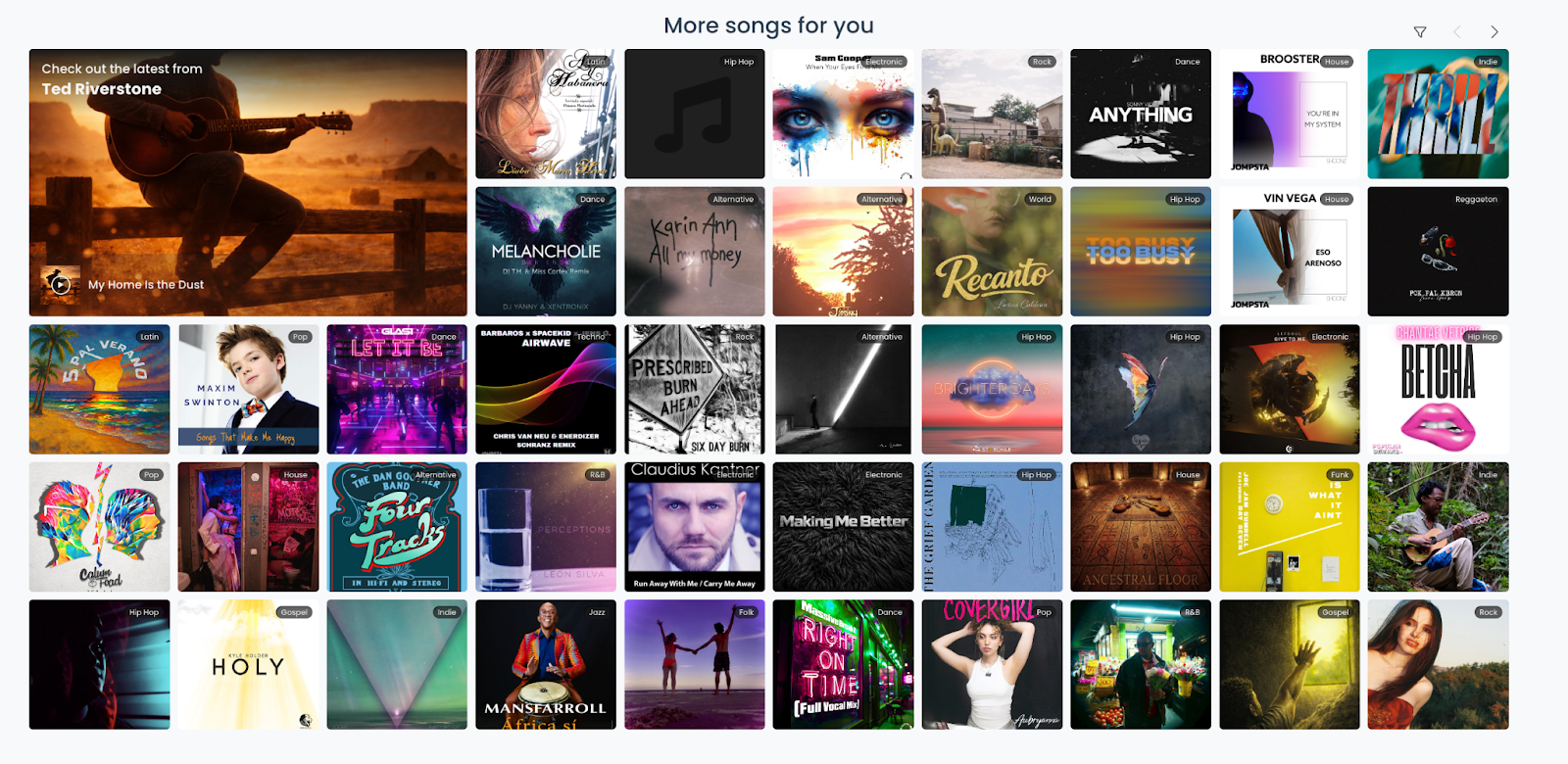
4. Artwork Perception Bias Is Real
Visual cues matter more than artists realize. Before pressing play, a playlister sees:
- Your cover art
- Your artist name
- The overall aesthetic presentation
If your artwork looks low resolution, visually cluttered, off-brand for the genre…it can subconsciously influence their expectations before the first note plays.
You can refer to the playlister dashboard here for a better understanding of what playlisters see from their end:
What to do:
- Use high-quality, genre-appropriate visuals.
- Avoid overcrowded text or outdated design styles.
- Make sure your branding aligns with your sound.
*PRO TIP: Your Brand Engagement Index (BEI) in your PlaylisterClub dashboard measures how your cover art is performing visually. A higher BEI means your artwork is capturing attention and encouraging playlisters to click and listen. If your BEI is on the lower side, it may be worth experimenting with different visual styles, layouts, or branding on future releases to see what resonates more strongly.
It may seem superficial, but presentation signals professionalism → and professionalism builds trust.
5. Timing & Curator Mood
This is sometimes the most overlooked factor. Keep in mind that playlisters are human, they might be:
- Updating a specific mood playlist
- Looking for something high-energy that day
- Focused on seasonal themes
- Simply not in the right headspace for your sound
Because discovery is organic on our platform, timing plays a role. A song skipped today might resonate a week later in a different context.
That's why campaigns can build gradually. Momentum isn't always immediate, and skips don't always mean rejection.
What to do:
- Don't panic over early results.
- Let the campaign run its course.
- Focus on long-term consistency across releases.
- Take curator feedback seriously, even on rejections (it's a roadmap for improvement).
Playlisters need to find your song in their feeds, listen to it, and decide if they want to add it to their playlists based on personal preference. This process takes time, which is why some tracks get picked up later in the promotion period rather than immediately. It's the nature of true organic discovery, where songs aren't artificially pushed, but rather placed in front of real curators who take the time to engage with them.
Key Takeaways
- View a skip as feedback, not failure. It usually reflects fit, timing, or presentation, not necessarily your talent.
- Optimization beats emotion. Small adjustments (genre accuracy, preview selection, artwork quality) can significantly impact results.
- Playlisters don't think like fans. They're building cohesive listening experiences, which means context always matters.
- Organic discovery takes patience. Momentum can build gradually as the right curators encounter your track at the right time.
FAQ's
Q: If my song is getting skipped, should I stop promoting it?
Not necessarily. First, look at the data. Are certain playlists adding it? Is your BEI strong? Are you seeing gradual traction? If there are signs of alignment, it may be worth letting the campaign run. If engagement is consistently low across the board, it could signal it's time to pivot to a different release.
Q: Should I change my preview mid-campaign if results are slow?
Your audio preview should be the first thing you check as soon as your campaign is launched. That said, you can edit it at any point while the campaign is live to make sure the strongest part is set as the first 30 seconds.
Q: Does getting added to smaller or unexpected playlists still help?
Yes, even if a playlist isn't perfectly aligned with your core genre, exposure to engaged listeners can still create valuable traction and future algorithmic signals.
At the end of the day, PlaylisterClub is built on real human discovery. That means real human decisions, which are always shaped by taste, context, timing, and presentation.
Instead of viewing skips as rejection, view them as insight. When you start thinking like a playlister, considering fit, flow, mood, and visual presentation, your results become easier to understand and build upon.
The goal isn't to force every curator to say yes. It's to make it easy for the right ones to say yes.
Photo by Benjame Abi on Unsplash





